


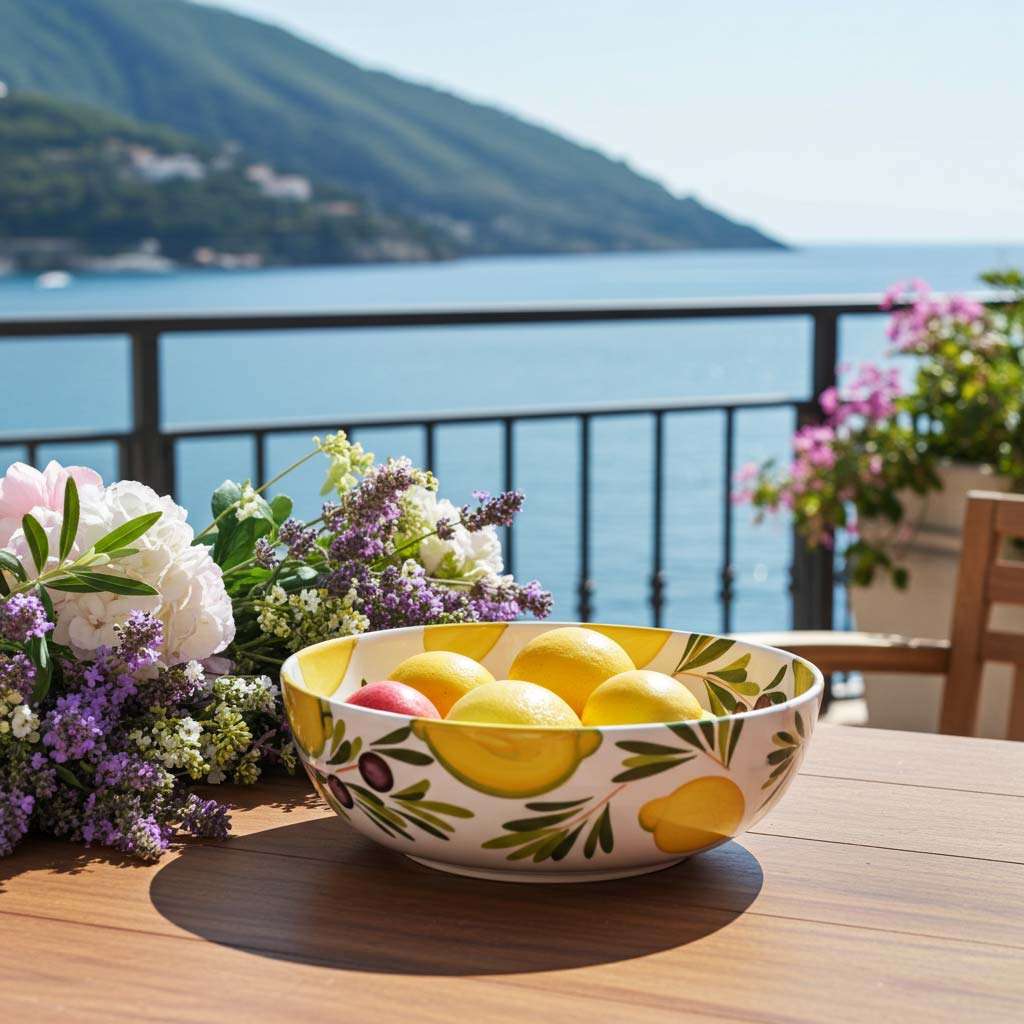
We live in an era where most of the objects we use every day are mass-produced. Everything seems identical, flawless, and impersonal. Italian artisan ceramics, on the other hand, tell a different story—one of skilled craftsmanship, Italian tradition, and a passion for an art that has been passed down through generations.
.
Choosing a handmade ceramic piece means much more than simply buying a plate, a bowl, or a serving tray. It means bringing a unique creation into your home—carefully crafted by hand and designed to stand the test of time.
The Difference Between Industrial Ceramics and Italian Artisan Ceramics
The main difference lies in the manufacturing process. Industrial ceramics are produced using automated methods that make it possible to manufacture thousands of identical pieces with consistent precision.
Italian artisan ceramics, on the other hand, are created through an entirely different process. Each piece is carefully shaped, refined, glazed, and hand-painted by skilled artisans. Even when the design is the same, no two pieces are ever exactly alike, making every creation truly unique.
It is precisely these subtle variations that make each piece so special. Slight differences in brushstrokes, glaze tones, and decorative details are the hallmark of true craftsmanship, reflecting the artisan’s skill and the authenticity of every handmade creation.
The Value of Made in Italy
Made in Italy is synonymous with quality, tradition, and exceptional attention to detail. In the world of ceramics, it means using carefully selected materials, time-honored techniques, and expert craftsmanship carried out with patience, precision, and passion.
Every stage of the production process requires skill and experience:
- Preparation of the clay;
- Shaping the piece;
- Natural drying:
- first firing;
- glazing phase;
- entirely hand-decorated;
- A second high-temperature firing.
This process takes time, but it is precisely time that makes each creation truly unique.
The beauty of decorations inspired by nature
Among the most beloved motifs of the Italian tradition are decorations inspired by the colors of the Mediterranean.
Lemons, olives, tomatoes, and leaves instantly evoke the warmth of Italian dining tables, authentic cuisine, and the welcoming atmosphere of traditional homes.
These decorative designs blend beautifully with both classic interiors and modern kitchens, adding color and elegance while remaining timeless.
Every brushstroke reflects the artisan’s creativity, making each piece truly one of a kind.
Crafted to last for years.
A high-quality handcrafted Italian ceramic piece is more than just a decorative object.
It can become part of life’s most cherished everyday moments:
- serving a family lunch;
- presenting a dessert at a celebration;
- decorating an elegant table;
- becoming a gift to be cherished and kept for many years.
Unlike industrial products, these objects gain value over time because they preserve the memories of the occasions when they are used.
How to recognize authentic Italian handcrafted ceramics
When purchasing handmade ceramics, it is important to pay attention to certain details.
A true artisan-crafted piece features:
- hand-painted decorations;
- slight differences between one piece and another;
- refined finishes;
- quality materials;
- certified Italian production.
These characteristics are the hallmark of authenticity and true handcrafted craftsmanship.
Craftsmanship that inspires emotion
In a world increasingly driven by mass production, choosing handcrafted Italian ceramics means supporting artisans who dedicate their time, expertise, and passion to creating pieces made to last.
Every plate, bowl, serving tray, or baking dish is more than just a home accessory—it is a small story of tradition, craftsmanship, and a passion for beauty.
At Arte in Ceramica, we believe that every creation should evoke emotion even before it is used. That is why we create handcrafted Made in Italy ceramics, hand-painted and inspired by the colors and fragrances of the Mediterranean tradition.
Because true beauty is not created by a machine, but by the hands of artisans who transform clay into works of art designed to accompany everyday life.
